

- Email or SMS sign-ups
- Add-to-carts
- Checkout starts
- Quiz or lead form submissions
Which setup you need
Custom Goals work the same way on Shopify and custom stores. You add a short script wherever the action happens, then register the goal in your dashboard.Custom goals must happen in the browser. The script has to run on your website, on the same domain as the Northbeam Pixel, while the visitor is on the page.
Set up a custom goal
1
Check that the Northbeam Pixel is installed
The Northbeam Pixel must be running on the page where the action happens, and it must load first. Custom goals won’t track without it.
2
Add the script
Add this script so it runs when the action happens, for example after a form submits successfully or after an add-to-cart click:Replace
your_goal_id with your own Goal ID. You can add the script through Google Tag Manager (easiest for most stores) or directly in your site’s code.3
Register the goal in your dashboard
Go to Settings → Custom Goals and click Add Custom Goal. Fill in: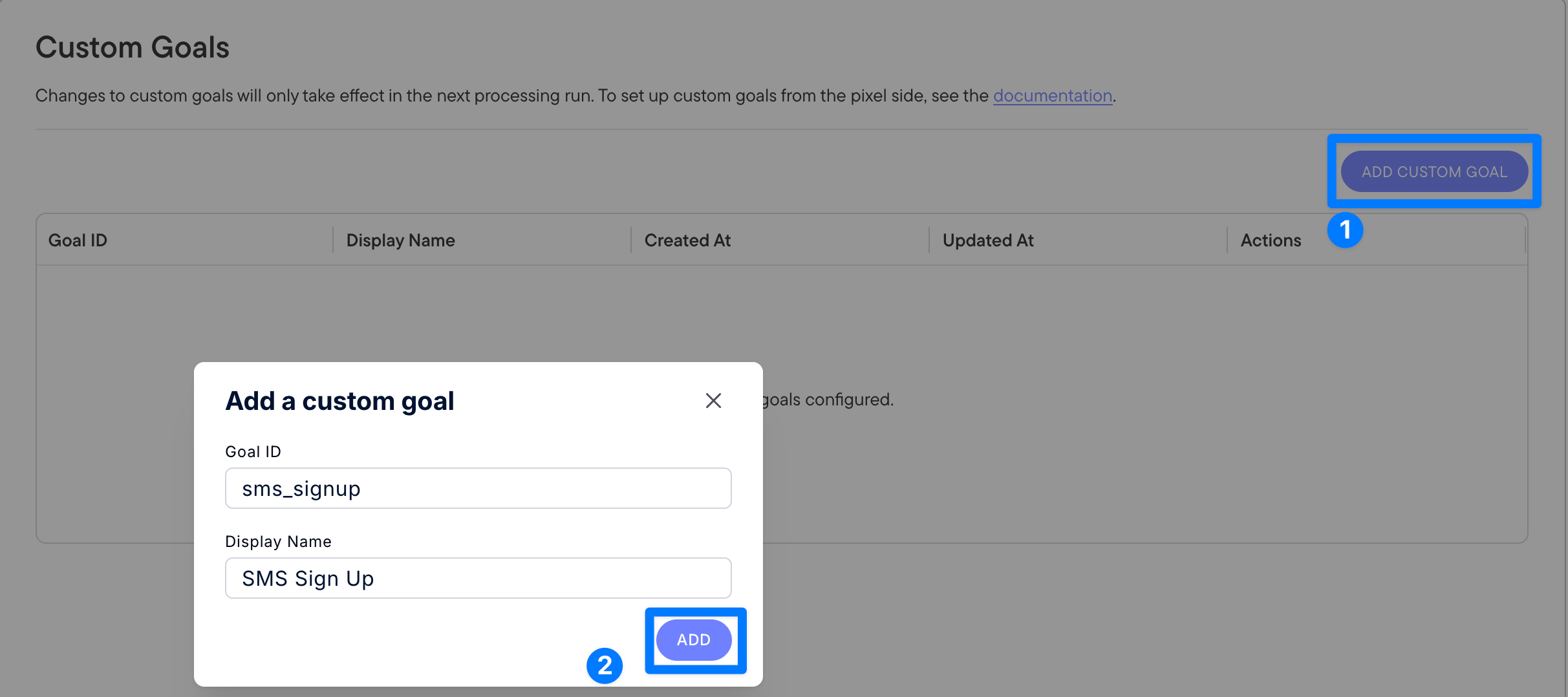
- Goal ID: the exact Goal ID from your script. If it doesn’t match exactly, the goal won’t show up.
- Display Name: the metric name you’ll see in your dashboard (for example,
SMS Sign Up).
4
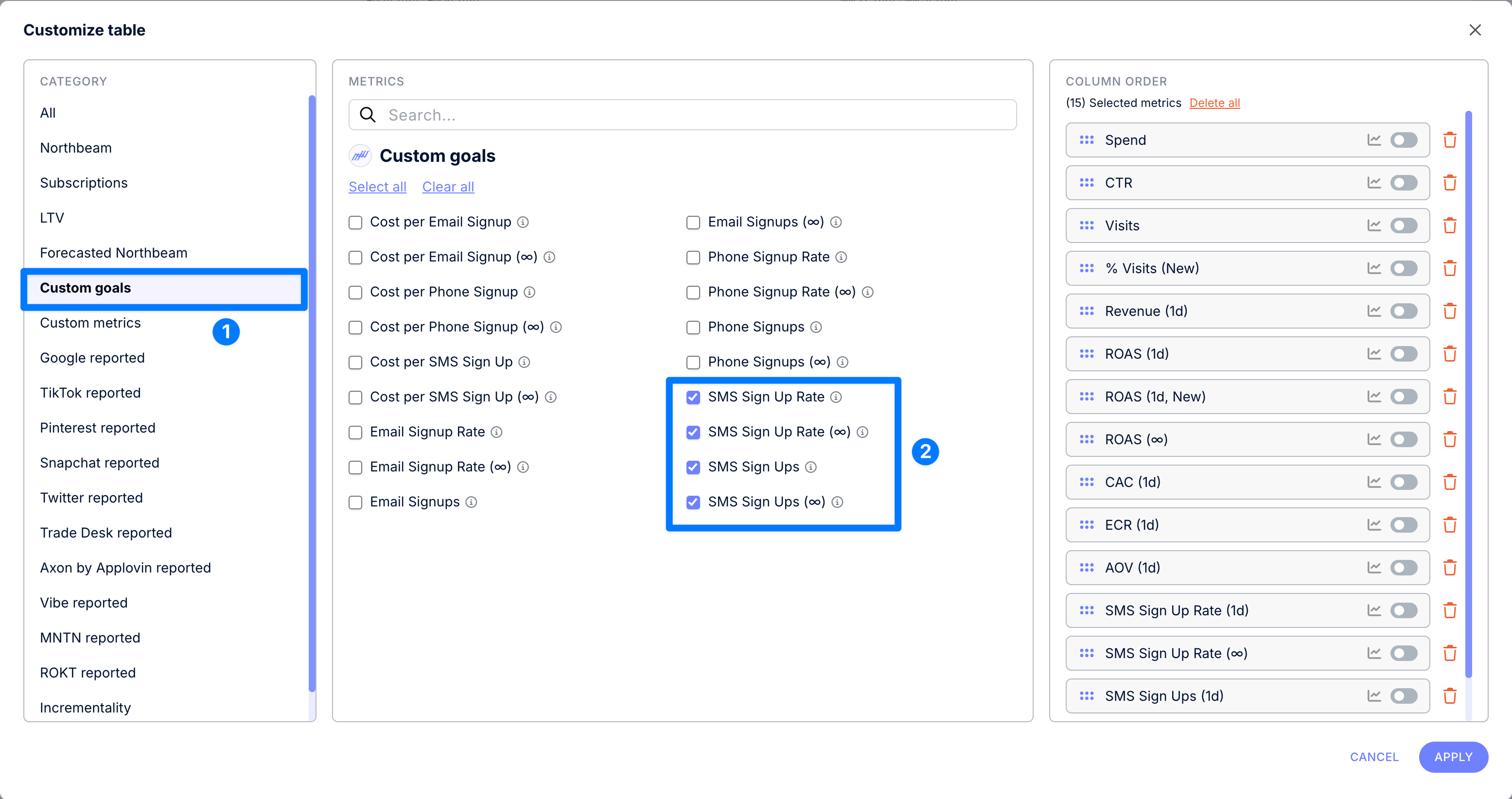
Add the goal to your Sales page
After the goal fires at least once, it’s available as a metric. On the Sales page, click Customize Table.
Goal ID rules
- Use lowercase letters, numbers, and underscores only. Hyphens or spaces stop the goal from showing up in your dashboard.
- The Goal ID in your script and in your dashboard must match exactly.
sms_signup, email_signup, add_to_cart, quiz_submit, initiate_checkout.
Troubleshooting
If a goal isn’t showing up, check that:- The Northbeam Pixel is running on the page where the action happens
- The Goal ID in your dashboard matches the script exactly
- The script runs when the action happens, not on page load or on the wrong trigger
- The action happens on the same domain as the Northbeam Pixel
- At least one processing run has finished since you added the goal